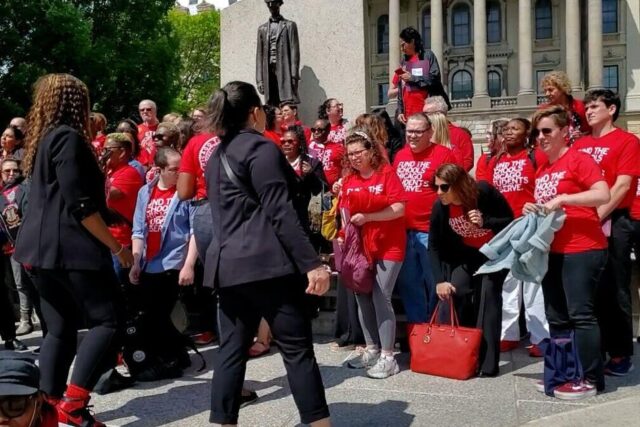
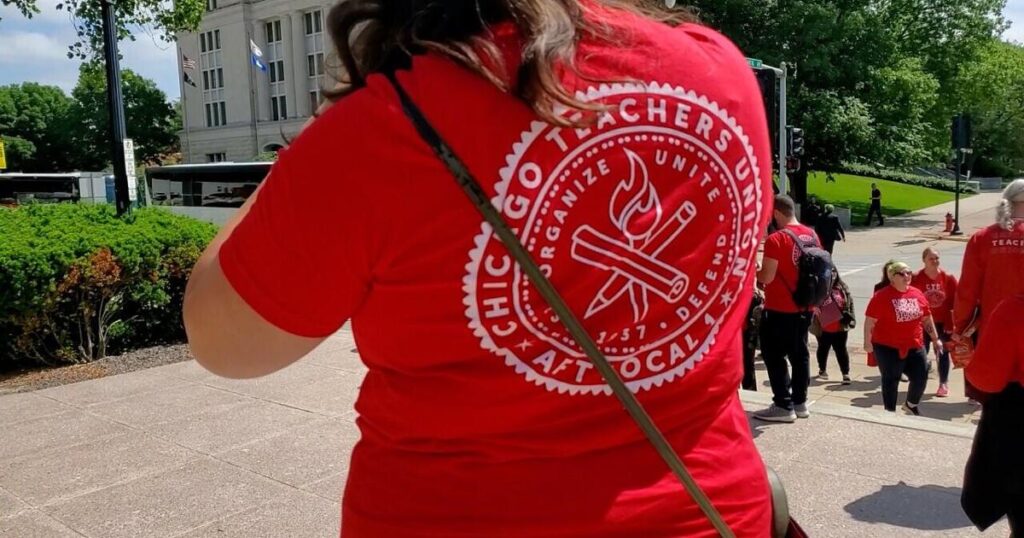
(The Center Square) – Teachers union officials and educators across Illinois want state lawmakers to increase funding for public schools by more than $500 million during the legislature’s six-day-long fall veto session.
The Illinois Federation of Teachers is urging lawmakers to increase funds for the state’s Evidence Based Funding formula passed in 2017.
They argued in a news conference Wednesday that not only did the state miss its own goal of having all districts funded at or above 90% of adequacy goals, but also that the decade old law should account for inflation, meaning the state is even further behind its original goals.
IFT Legislative Director Kelly Turner said the state is short on funding by $7 billion.
“The gap grew by $1.24 billion in a single year. Today, 660 districts serving 1.5 million students are below adequacy. At this pace, Illinois won’t reach its funding goal until 2037,” Turner said. “This veto session, lawmakers can make a down payment on the $7 billion they owe our students.”
The urgency for the funds this year is partly a result of the Chicago Public Schools deficit.
Outgoing Illinois House Speaker Emanuel “Chris” Welch promised to pass supplemental funding totaling $150 million this fall to address the district’s $732.5 million deficit before cost-cutting and layoffs may occur midway through the school year.
Some lawmakers representing districts outside of Chicago have said they won’t support that promise unless more funding is imposed statewide, which the federation is calling for. Officials from the union noted funding shortfalls exist statewide.
Member of the Senate Education Appropriations Committee Sen. Terri Bryant, R-Murphysboro, told The Center Square that the state has held up its end of the bargain and more money can’t be the only solution for CPS.
“With the exception of I believe one year where we didn’t put anything in after our commitment, we’ve done that commitment,” Bryant said. “CPS or CTU or IFT does not get to come in now and say that they want some kind of special deal for themselves unless you’re going to renegotiate the whole funding formula and I don’t think the rest of the state wants to renegotiate.”
Cyndi Oberle-Dahm, executive vice-president of the IFT, said their immediate request for more taxpayer funds is feasible.
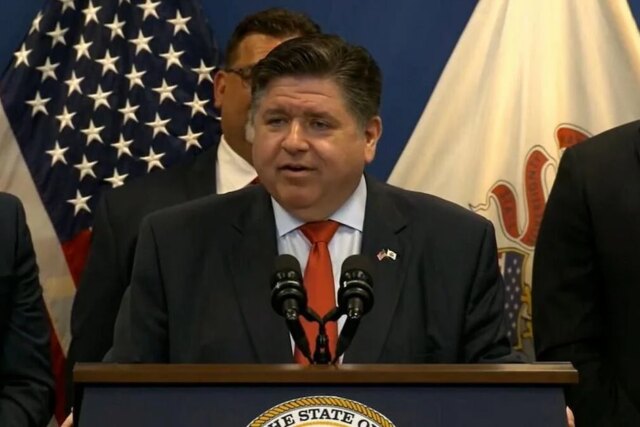
“The money is there. Gov. Pritzker’s own fiscal report projects nearly $1.1 billion more in revenue than planned this year,” Oberle-Dahm said. “We are asking lawmakers for a downpayment of $400 million dollars for evidence-based funding and $100 million for mandated categoricals, such as special education and transportation.”
Despite projected revenue exceeding expectations by roughly $1.1 billion, a report from the Governor’s Office of Management and Budget said there’s little room for the state to go beyond planned spending.
GOMB is projecting a $2.4 billion deficit for fiscal year 2028, and additional expenses for the state would likely amplify the strain to pass future budgets, according to the report.
Pavlyn Jankov, director of research at CPS, said the revenue is proof the state can afford to fund education more.
“Those funding streams that we’re talking about, those are a budget request from state agencies that were asking for more money because of the increasing costs to school districts,” Jankov said. “The current surplus shows that there’s actual capacity to meet exactly the demands that the state agencies made in the first place last year.”
Bryant said CPS has already gotten favorable treatment through the funding formula, saying the district already “double dipped” when it was first passed because previous state funding for the district was counted as a baseline despite for the district before increases went into place.
“We have been notorious in Illinois in just trying to throw money at things and thinking that’s going to resolve this. Throwing money at the Chicago public schools is not going to resolve their problem,” Bryant said. “There’s a lot of other issues in the city of Chicago that have to be resolved that would also help them.”
Oberle-Dahm said they brought the issue to lawmakers during the veto session because state support of public education has fallen short.
“If this doesn’t work, we’re going to push hard for more EBF next legislative session in the spring. The long game is a progressive tax [on ballots in the] election of 2028,” Oberle-Dahm said.
Advocates juxtaposed the legislature’s general lack of consideration with how much the legislature is focusing on passing a bill to support a new Chicago Bears stadium.
Neither issue has had legislation progress during the veto session, and taxpayer impact for a new stadium is largely undetermined.
The House adjourned Wednesday without consideration of supplemental funds and less than an hour total on the floor in the first week of the fall session.